Introduction
The 2026 Men’s World Cup is marked by several firsts: a new format with 48 matches instead of 32; three host countries and sixteen cities; and a sprawling tech infrastructure that has been referred to as the “iPhone moment” for the most popular sport in the world when it comes to deploying technology on and off the pitch. Behind the spectacle of AI-powered footballs and 3D virtual avatars in the stadiums, there is less visible technology being implemented to monitor and control crowds and protests, amass enormous amounts of data, and further establish a lasting surveillance ecosystem in host cities and countries.
This year’s tournament follows an established trend where surveillance technologies are deployed under the justification of ensuring the safety and security of sports matches—a justification that is even more pervasive in mega-events. Over the last 15 years, civil society organizations in Brazil, South Africa, Qatar, and France, have documented numerous human rights violations and the widespread implementation of surveillance tech when those countries hosted either the Olympic and Paralympic Games or the Men’s World Cup. Part of the legacy of these events is also the normalization of the use of surveillance tech for purposes far beyond the goals that were initially communicated to the public.
In 2022, Ranking Digital Rights (RDR) partnered with SMEX, a non-profit that advocates for and advances human rights in digital spaces across West Asia and North Africa, to investigate the state of the internet and digital surveillance in Qatar, the Men’s World Cup host country that year. The three-part series, titled Red Card on Digital Rights, explored how the World Cup mega-event helped facilitate surveillance and perpetuate its use long after fans left the stadium.
As the 2026 World Cup takes place in Canada, Mexico, and the United States, RDR has once again conducted extensive research on the companies partnering with FIFA, governments, and venues to install and experiment with surveillance tech products and services. Some of these products are being used at this scale for the first time.
From hardware giants such as Motorola and Lenovo to lesser-known companies like KeepZone AI and Ondas Inc., we have collected public information on the business agreements, scale, and types of products and services that are giving shape to the surveillance stack1 deployed in the context of the biggest and most popular mega-event in the world.
On top of the existing surveillance infrastructure in host stadiums, host cities have augmented their monitoring and tracking capabilities ahead of the event. These capabilities range from video surveillance and automated license plate readers (ALPRs) to drones and robot “dogs.” In addition, this tournament is considered a testing ground for a hybrid model that combines cloud and edge computing,2 leveraging major infrastructure and more than 17,000 devices deployed in the stadiums. These technologies provide near real-time internal broadcasting and massive data analysis capabilities. Media reports indicate that the technological shift promoted by the event is driving higher valuations for specialized AI chipmakers and high-density data center real estate investment trusts (REITs).
The increasing use of video cameras (closed circuit television, or CCTV), facial recognition technology, and behavioral analytics in the context of sports events reflects a broader normalization of tech-facilitated surveillance in public spaces that is already changing the way people can exercise and enjoy their right to privacy, freedom of expression, and peaceful assembly.
For the average person, the human rights harms stemming from surveillance are more directly tangible through what is known as ‘chilling effects.’ Chilling effects are traditionally understood in law as the behavioral changes of a person who knows or suspects that they are being surveilled, leading to self-censorship due to fear of potential legal punishment. But as law professor Jon Penney argues, chilling effects also have the power to shape speech and behavior toward social conformity, restricting expression that is deemed unacceptable. According to Penney, even the mere possibility or reminder that they might be under surveillance leads people to act more in conformity with pro-social norms and avoid actions that may lead to negative judgment.
Tech-facilitated surveillance introduces an additional layer of ambiguity and uncertainty. Some of the technologies we identified through this research are deployed covertly, so their use is not immediately apparent to fans attending events or regular bystanders. Even if people know or realize they are being recorded, they may not be aware of who is watching, what authority they hold, and how the data collected will be used or shared with third parties.
For 2026, FIFA required host cities to develop human rights action plans addressing the most salient issues connected to the tournament—a first in World Cup history. The human rights community welcomed this initiative. Ultimately, however, these roadmaps fell far short of what should be expected of an event of this magnitude.
The final plans were published not long ahead of the first match in mid-June, limiting meaningful analysis and feedback. As we explain in the following section, very few cities considered potential privacy violations associated with the widespread use of surveillance tech. Most of them also failed to specify how both the host cities and the companies involved would respect and protect attendees’ freedom of expression and information as well as privacy writ large.
In spite of this challenging context, communities and organizations have rallied before and during the event to inform people, offer mutual support, map the surveillance infrastructure, mobilize, and denounce violations and abuse. There is no fair play when the world’s biggest sporting event is used as a gateway to a pervasive architecture of surveillance. But collective resistance has set the tone for how to take back the game.

Missing referees: Host cities’ Human Rights Action Plans
For the first time ever in the history of the event, FIFA introduced human rights considerations for host countries and cities as part of the bidding process for the 2026 World Cup. Member associations had to explicitly commit to upholding the United Nations Guiding Principles on Business and Human Rights (UNGPs), submit a human rights strategy, commission an independent study assessing the national context, engage with human rights stakeholders, and sign agreements under which governmental and private actors involved in organizing the event would pledge to follow the UNGPs.
In June 2024, FIFA published its “FWC26 Human Rights Framework”, a guidance document that all 16 host cities were instructed to use as the baseline for tailored “Host City Human Rights Action Plans.” FIFA’s guidelines consist of three main sections covering inclusion and safeguarding, workers’ rights, and access to remedy. Among the issues the document encourages the action plans to address, there is a public safety category that includes suggested targeted actions like “addressing potential risks to the right to privacy” and “the responsible use of personal data and surveillance and AI technology in connection with the hosting and staging of the FIFA World Cup 2026”.
The original deadline for host cities to present their action plans was March 2025, later pushed to August 2025. However, by the beginning of April 2026, just two months before the inaugural match, only four host city committees had published their plans.
Our detailed analysis of the host city human rights action plans evidence a lack of consideration for human rights impacts arising from the use of technology, especially the impacts derived from surveillance and data protection risks. The plans use broad and vague language, lacking detail both in the reasoning for how the impacts included were identified and in the specific actions taken to mitigate such impacts. Most of the action plans limited themselves to redeploying FIFA’s framework as a generic template, without putting in the work to carefully expand its scope according to the specific context of each city.
Of the 16 city-level action plans, eight cities explicitly included a framework and actions to uphold the rights to freedom of expression and information: five in the US (Atlanta, Boston, Dallas, Houson, and Philadelphia), two in Canada (Toronto and Vancouver), and one in Mexico (Guadalajara). These cities made high-level commitments, passed resolutions, or established mechanisms to protect collectives such as human rights defenders and journalists. These commitments and actions, though, do not fully and explicitly address harms in relation to the deployment of a surveillance stack.
In turn, only three cities explicitly addressed considerations about the right to privacy, including one in the United States (Boston) and two in Canada (Toronto and Vancouver). This is a glaring omission in light of the vast surveillance and “smart city” infrastructure already in place in most of these cities.
The city of Boston included a “strategy” to “Protect Privacy and Personal data” that entails aligning the use of CCTV, access-control, and other monitoring measures with the city’s guiding frameworks, such as the Surveillance Oversight and Information Sharing Policy. Boston is one of 10 cities in the United States that has banned the government’s use of facial recognition technology.
Toronto‘s action plan established that its safety and security unit “have procedures in place to address privacy concerns in relation to the deployment of security surveillance systems such as CCTV cameras and Remote Piloted Aircraft System.” It also specified that these procedures “ensure the lawful collection, use, disclosure, retention and destruction of images obtained from Service CCTV, while maintaining the privacy rights of the public.” Although the document mentions “event-specific plans for the responsible use of surveillance and personal data,” these do not appear to be public.
The city of Vancouver’s action plan had the most information among the three cities that addressed privacy issues. In the section titled “Right to Privacy, Responsible Use of Personal Data, and AI technology, and Surveillance”, the city explains the scope of its privacy policy, covering: compliance, accountability, collection, notice and consent, use and disclosure, access and accuracy, storage, security, retention and disposal, openness, breaches, and investigations.
More importantly, Vancouver’s action plan is the only one that establishes a clear and explicit duration for the deployment of the technology, stating that “the City has installed closed-circuit television (CCTV) cameras around key event venues and locations that will only be activated during the event period.” It further clarifies that the cameras will be decommissioned following the event. In line with established good practice, Vancouver performed privacy impact assessments for the cameras and shared them with the Office of the Information and Privacy Commissioner for British Columbia, according to the action plan.
The Information and Privacy Commissioners of Ontario and British Columbia issued a joint letter calling on the relevant public authorities and agencies organizing the World Cup events in Toronto and Vancouver to respect a set of principles when purchasing and deploying surveillance technologies. The Commissioners urged the organizers to justify the necessity and proportionality of measures and technologies, establishing data minimization and data retention periods, and acting transparently. The principles also call for any contracts with third-party technology providers to address accountability for privacy and access to information.
In addition to these three cities, Atlanta also included “data privacy” under the focus areas of its action plan. As stated in the action plan’s executive summary, the city committed to “[a] technology review for facial recognition/biometrics; data minimization standards; public transparency report on surveillance; [and] WCAG-compliant digital platforms.3
However, none of these commitments are present in the full version of Atlanta’s action plan. Only one paragraph in the 57-page document mentions surveillance in passing: “[t]his section reflects Atlanta’s recognition that human rights in the 21st century extend to the digital realm. By establishing clear standards for data privacy and surveillance during the FIFA World Cup 2026™, the City aims to set a precedent for responsible technology use at major sporting events.” No further details were included, and the paragraph appears under the section about prevention and mitigation of adverse environmental impacts, which begs the question whether a section dedicated to privacy ended up being entirely removed.
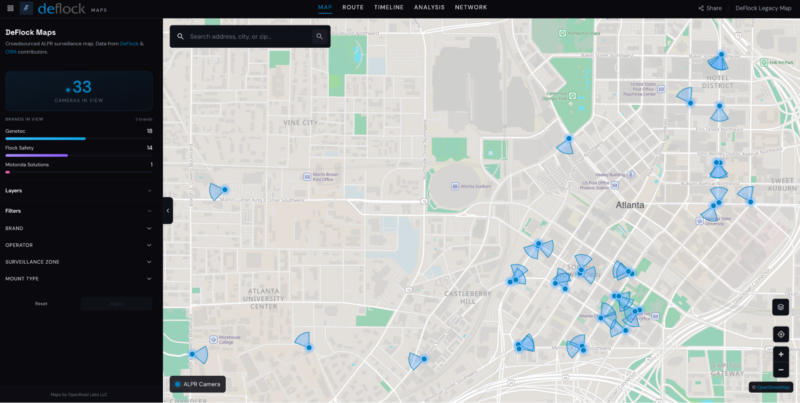
Failing to properly address how surveillance technologies impact human rights should raise concerns, especially as Atlanta has earned the reputation as one of the most surveilled cities in the United States. Residents have protested the expansion of policing and law enforcement’s use of Flock‘s license plate reader cameras, which have been connected to immigration-related searches.
Play Fair ATL, a coalition of labor, housing, immigration, and criminal justice community organizations, raised concerns about the limited consideration given to their recommendations during the consultation process for the action plan, resulting in a watered-down final version that lacks key accountability mechanisms. Similar allegations were made in Philadelphia, which only released its action plan to the public after complaints from civil society. When the document was revealed, Jennifer Li—a policy lawyer at Georgetown Law who leads the World Cup Dignity 2026 Coalition—stated the plan “says way too little, far too late.”
In Kansas City, the Transportation Authority (KCATA) announced a two-year pilot program for the installation of “AI-powered” cameras on buses, partnering with SafeSpace Global as the technology provider. These cameras introduce new surveillance and tracking capabilities through the use of movement and shape detection, facial recognition, and automated alerts about “safety threats”.
Kansas City faced delays in deploying the cameras ahead of the World Cup. Originally, authorities planned to install up to five cameras in nine buses; as of June 2026, their ambitions had grown to as many as 30 buses. The success of the pilot program was defined rather vaguely by the KCATA, whose stated goal with the cameras was to “reduce security costs, improve response time and address societal challenges”. However, privacy concerns are not addressed in Kansas City’s human rights action plan, and it does not show any consideration to potential risks arising from surveillance.
Civil society organizations are also scrutinizing the efficacy of action plans in other host cities. In New York, the Bar Association’s Civil Rights Committee, the Foreign and Comparative Law Committee, and the Business and Human Rights Committee, sent a letter to the host committee and local government partners to encourage a comprehensive evaluation of the tournament’s human rights impacts after the conclusion of the World Cup, including whether the commitments in the city’s action plan were ultimately fulfilled.
| City | Published | Considers the right to privacy & identified surveillance risks? | Considers the right to freedom of expression and information? |
|---|---|---|---|
| Atlanta (Mercedes-Benz Stadium) | Yes – 9 March | No | Yes |
| Boston (Gillette Stadium) | Yes – May (undated) | Yes | Yes |
| Dallas (AT&T Stadium) | Yes – 11 May | No | Yes |
| Houston (NRG Stadium) | Yes – 11 May | No | Yes |
| Kansas City (GEHA Field at Arrowhead Stadium) | Yes – 28 May (dated 11 May) | No | No |
| Los Angeles (SoFi Stadium) | Yes | No | No |
| Miami (Hard Rock Stadium) | Yes – June (undated) | No | No |
| New York City / New Jersey (MetLife Stadium) | Yes – 22 May | No | No |
| Philadelphia (Lincoln Financial Field) | Yes – 28 May | No | Yes |
| Seattle (Lumen Field) | No | No | No |
| San Francisco Bay Area (Levi’s Stadium) | Yes – May (undated) | No | No |
| Toronto (BMO Field) | Yes – 8 June | Yes | Yes |
| Vancouver (BC Place) | Yes – 25 May | Yes | Yes |
| Guadalajara (Akron Stadium) | Yes | No | Yes |
| Mexico City (Banorte Stadium) | No | No | No |
| Monterrey (Estadio BBVA) | No | No | No |
In July 2025, the US Department of Homeland Security introduced a new grant under the Federal Emergency Management Agency (FEMA), awarding 625 million US dollars to the eleven host cities in the country to strengthen security operations, on top of 221 million USD in Counter Unmanned Aircraft Systems (C-UAS) grants available to help protect host cities against drone threats.
| State | Host City Committee Task Force | Allocation |
|---|---|---|
| California | Los Angeles | $57,934,146 |
| California | San Francisco | $51,191,244 |
| Florida | Miami | $73,698,993 |
| Georgia | Atlanta | $73,390,940 |
| Massachusetts | Boston | $46,053,187 |
| Missouri (on behalf of Kansas and Missouri) | Kansas City | $59,522,190 |
| New Jersey (on behalf of New York and New Jersey) | New York/New Jersey | $66,205,076 |
| Pennsylvania | Philadelphia | $48,490,887 |
| Texas | Dallas | $51,584,327 |
| Texas | Houston | $64,676,165 |
| Washington | Seattle | $32,252,845 |
Out of the 11 host cities that received the FEMA funds, only three made some of their intended uses public: Atlanta, Boston, and Dallas. The Atlanta Police Department expanded its drone unit “to support enhanced aerial surveillance, rapid incident response, and real-time crowd management and flow monitoring.” The Massachusetts government allocated the funds to “enhanc[ing] cybersecurity monitoring and threat detection, [the] deployment of real-time intelligence and situational awareness tools, [and] significant investment in drone detection and counter-drone capabilities (C-UAS).” Finally, the Dallas Police Department spent part of the funds to expand its camera network.
The Players: The companies and tech behind the World Cup surveillance stack
Tech companies see mega sporting events as highly strategic business opportunities. Even companies that are not publicly associated with the 2026 World Cup have published guides on how “AI-powered systems” could “revolutionize” the security plans for the tournament and other similar events, and which of their offerings could be set up to reinforce real-time, holistic surveillance.
At Lenovo’s 2024 Tech World innovation event, the company was announced as FIFA’s official technology partner, a deal that covers a multi-event agreement including the FIFA Club World Cup 2025, the 2026 Men’s World Cup and the 2027 Women’s World Cup. Others, such as Nexera (previously Jeffs’ Brands) and Mobotrex have had the opportunity to win or expand government contracts in preparation for the 2026 World Cup.
Our review of publicly available sources—primarily press releases, news reports, and bidding contracts—identified at least 21 different companies directly participating in building a surveillance stack for the 2026 World Cup. We refer to the surveillance stack using a framing proposed by New York University scholar Vincent M. Southerland, as a set of technologies that are used to “surveil indiscriminately, and which are rarely governed by a warrant requirement or any of the traditional legal oversight mechanisms”, guiding decisions about “who to police, where to police, how to police, and when to police” (Southerland, 2022, p. 10). This definition encompasses AI-powered systems that process and analyze large amounts of data to monitor, track, and profile individuals and communities.
These tech companies provide products and services that we can largely classify into a five-layer stack (click to expand):
Data harvesting at scale
This category comprises technologies such as video recording, audio detection, license plate reading, biometric data collection and authentication, with which the implementers (be it the company itself or a government agency) gather personal data from fans and passersby. They may also collect or infer other data such as sex, gender, race, ethnicity, height, country of origin, voice samples, facial characteristics, iris features, and other physical characteristics. These technologies can be encountered at multiple points: first, when accessing the country through airports or other border crossings; when moving around the city streets and transit hubs; and then at the stadium entrances and facilities.
Human rights impacts: Indiscriminate and pervasive surveillance violates the right to privacy and the principles of necessity and proportionality. Facial recognition systems, more specifically, are known for exacerbating overpolicing bias towards minorities and incurring high error rates. Its use in public spaces also creates an environment of fear that stifles political freedom and has already been linked with numerous wrongful arrests.
Predictive policing
These companies develop algorithmic systems designed to “predict” behavioral patterns and traits. These systems analyze video feeds, location history, communications metadata, and other information to assign risk scores or forecast future actions. They serve to justify the intervention of law enforcement authorities and security forces to “anticipate” illicit behaviors.
Human rights impacts: These systems are trained with historically biased datasets and risk amplifying bias. Previous research also shows how data extraction schemes and “likelihood scores” violate the right to a fair trial and privacy.
Communications interception
Companies that are able to intercept communications or facilitate such interception capture mobile phone data, tracking location, communications content, and metadata. These systems, such as International Mobile Subscriber Identity (IMSI) catchers, operate by impersonating cellular towers and intercepting signals from mobile devices in a geographic area without targeting specific individuals. This category also encompasses more established firms such as telecom providers, which routinely face government wiretap requests.
Human rights impacts: Specialized devices collect data indiscriminately from everyone within their radius, inevitably violating people’s privacy and right to freedom of assembly when they are deployed in protests or rallies. Their use was shown to disproportionately impact black communities in the US.
Data integration and command centers
At this layer, companies merge data from multiple sources, either collected by them or authorities, then analyze it, make inferences, and run classification or predictive models to automate decision making and reduce or eliminate human intervention. Integration systems, for instance, may create unified profiles by combining facial recognition data with license plate information, communications metadata, location history, and behavioral predictions. Once integrated, data may become accessible across jurisdictions and agencies, eliminating the fragmented safeguards that existed while the systems remained separate. Integration may also create permanence: data that might have been deleted in individual systems persists indefinitely in integrated databases.
Human rights impacts: Reports claim the data flowing into some of these systems has potentially been shared illegally, violating people’s privacy, while its outputs create the capacity for mass profiling, thanks to the consolidation of multiple data flows into a single source of information. These command centers are often built opaquely, without regard to oversight mechanisms and algorithmic transparency.
Aerial surveillance
Unmanned Aircraft Systems (UAS), colloquially referred to as drones, are often equipped with cameras and sensors that provide persistent overhead surveillance of stadiums, fan zones, transit hubs, and surrounding areas, feeding data into the other layers in the stack. Drones can track individuals across wide geographic areas and access spaces ground-based surveillance cannot reach. Counter-drone systems detect and track aircrafts to prevent unauthorized drones, but in doing so, they also create additional layers of airspace surveillance and monitoring.
Human rights impacts: Drones also support indiscriminate surveillance, worsening risks to the right to privacy, freedom of expression, and peaceful assembly. Additionally, counter-drone systems carry exposure risks, potentially sweeping mobile data via radio frequency monitoring, even if they do so unintentionally. Furthermore, reports show the use of these systems by law enforcement agencies has produced chilling effects; they are employed to monitor individuals and communities, curtailing freedom of association and freedom of expression.
While we cannot confirm whether all of these layers were in place and operating at the same time in the context of all 2026 World Cup-related events (e.g., official matches, fan zones, and public watching parties), the categorization helps to illustrate the pervasive nature of the products and services being acquired and deployed in various jurisdictions, and their compounded effects on human rights.
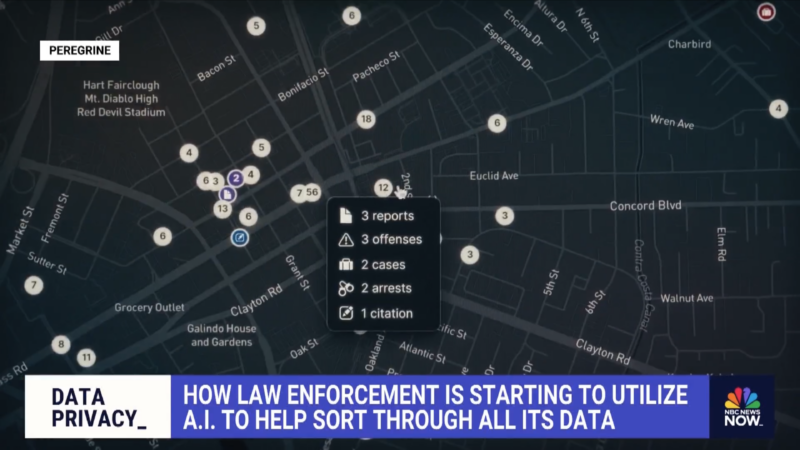
It is also worth noting that not all the companies listed in our research publicized new contracts directly connected to the World Cup. Some of them instead enjoy longstanding relationships with local governments and law enforcement agencies where their products are being used. This is the case for Axon Enterprise, Clearview AI, Flock Safety, Palantir, and L3Harris. These companies are the cornerstone of increased policing capabilities, especially across host cities in the United States.
The following 13 of the 21 companies we mapped have received more than 15 billion USD in contracts with the US government over the past 18 years: Axon Enterprise, Booz Allen Hamilton, Clearview AI, Flock, Fortem Technologies, L3Harris Technologies, LiveU, MoboTrex (Derq), Motorola, NWN, Palantir, Parsons, and Peregrine. In Mexico, the company Seguritech announced itself as one the main security forces in the tournament, offering CCTV, analytics, drones, and cybersecurity services, all coordinated into a critical mission tech system. The company has obtained more than the equivalent of 3 billion USD in contracts with public institutions in the country in the last fourteen years.
In a highly concentrated sector with strong ties to law enforcement agencies, companies operating in the surveillance industry have little to no market incentives—or public policy pressure—to improve their transparency, address human rights risks, or implement due diligence mechanisms.
Among the companies listed below, 9 of them have a total of 22 human rights allegations associated with them in the Business and Human Rights Centre (BHRC)’s database. These allegations are related to potential or confirmed violations of the right to privacy, surveillance, gender discrimination, security issues and conflict zones, spyware technology, freedom of association, freedom of expression, clean, healthy and sustainable environment, supply chains, labor rights, lawsuits and regulatory action, forced labor and modern slavery, access to information, unfair trials, killings, racial, ethnicity, caste or origin discrimination, and digital freedoms, among others.
With the further deployment of these companies’ products and services for FIFA’s tournament, local communities are even more exposed to violations of their digital and human rights, especially to various forms of discrimination, breaches of privacy, and restrictions to other freedoms.
| Companies | Tech deployed | Products and services | Potential scale of deployment | Layer of the stack | World Cup-related agreements | Human Rights allegations (BHRC) |
|---|---|---|---|---|---|---|
| Axon Enterprise | AI systems, ALPR, CCTV, Drones or counter-drone systems, Facial recognition | Draft One: a GenAI product that writes police reports based on audio from officers’ body-worn cameras Fusus: surveillance integration of cameras & tech – Lightpost: street cameras Fleet 3: Dashcams with ALPRs Dedrone: anti-drone detection system | Cities, borders, venues | Data harvesting at scale, Predictive control, Integration and command, Aerial surveillance | The Dallas Police Department was “set to see [the] largest tech update in years”, with 120 million USD dedicated to extending its contract with Axon. (NBC, December 2025) | 1 |
| Booz Allen Hamilton | Big data | The Sit(x) platform is a managed service that runs on Amazon Web Services (AWS) GovCloud and enables rapid deployment of Team Awareness Kits (TAKs). | Cities, borders, venues | Integration and command | Sit(x) platform to be “deployed in five of the 11 U.S. cities slated to hold World Cup matches” (Dronelife, December 2025). | 1 |
| Clearview AI | AI systems, Facial recognition | Online database of face images where law enforcement and government agencies can conduct queries to identify people. | Cities, borders, venues | Data harvesting at scale | No specific World Cup-related contracts were found. But the company’s services are used by law enforcement agencies across US host cities. | 2 |
| Flock Safety | AI systems, ALPR, Big data, CCTV | License Plate Readers Video recording Gunshot Detection Mobile Security Trailers Flock Nova Flock FreeForm Flock Alpha (drone) Flock911 FlockOS | Cities, borders, venues | Data harvesting at scale | No specific World Cup-related contracts were found. But the company’s products and services are used by law enforcement agencies across US host cities. | 3 |
| Fortem Technologies | AI systems, Drones or counter-drone systems | TrueView R30 radar systems for detection and tracking SkyDome: command-and-control software for automated threat response DroneHunter hexcopter interceptors | Cities, borders, venues | Aerial surveillance | Fortem Technologies “has received a multimillion-dollar order to protect U.S. venues at the 2026 FIFA World Cup using its net-equipped DroneHunter interceptors. (…). This will mark Fortem’s second consecutive FIFA World Cup deployment” (Techbuzz, February 2026) | None reported |
| Hyundai Boston Dynamics | AI systems, Surveillance robots | Spot “robodogs” | Venues | Data harvesting at scale | Two “robodogs” will be stationed at the tournament’s International Broadcast Center in Dallas, with two more used at New Jersey’s MetLife Stadium. (Axios, June 2026) | None reported |
| L3Harris Technologies | AI systems, Drones or counter-drone systems, ISMI catchers | Stingray Drone Guardian | Cities, borders, venues | Communications interception, Aerial surveillance | No specific World Cup-related contracts were found. But the company’s products and services are used by law enforcement agencies across US host cities. | 1 |
| Lenovo | AI systems, Big data | Hardware Intelligent Command Center: mission control center where all technology is monitored and managed in real time 3D Stadium Digital Twins: to monitor situations in and around venues | Venues | Predictive control, Integration and command | FIFA’s official technology partner. | 2 |
| LiveU | AI systems, CCTV | LiveU IQ LiveU Reliable Transport | Cities, borders, venues | Data harvesting at scale | The company stated that its technology will “provide round-the-clock coverage of the tournament and fan zones. LiveU has also become a trusted partner for first responders and security teams in key host cities, helping them monitor and manage the multi-venue event and keep teams connected and informed”. (LiveU, June 2026) | None reported |
| MoboTrex (Derq) | AI systems, CCTV | SENSE platform: real-time detection and classification of vehicles and pedestrians; adaptive signal coordination; predictive intent modelling | Cities, borders, venues | Predictive control | The Houston City Council approved a 350,000 US dollar purchase of AI-powered video detection cameras from Derq (through MoboTrex). The cameras were set to be installed “along the Almeda corridor, a stretch of road that will link FIFA fan events in East Downtown to NRG Stadium” (Kurrant, May 2026) | None reported |
| Motorola | AI systems, ALPR, CCTV | Hardware | Venues | Data harvesting at scale | No specific World Cup-related contracts were found. But the company’s products and services are used by Law Enforcement Agencies across US host cities. | 1 |
| Nexera (Jeff’s Brands) | AI systems, , Big data, Drones or counter-drone systems, Sensors and radars | KeepZone AI: Checkpoint-Free Personnel Screening Cargo & Vehicle Inspection RF Spectrum & Wireless Threat Detection Zorronet unmanned AI control room | Cities, venues | Data harvesting at scale, Communications interception | “KeepZone AI was appointed as a non-exclusive reseller of SeeTrue’s innovative threat detection solution in Mexico, with a focus on critical infrastructure, urban security, and military/defense segments. The Agreement includes the FIFA World Cup 2026 in Mexico City as an identified program opportunity.” (GlobeNewswire, February 2026) | None reported |
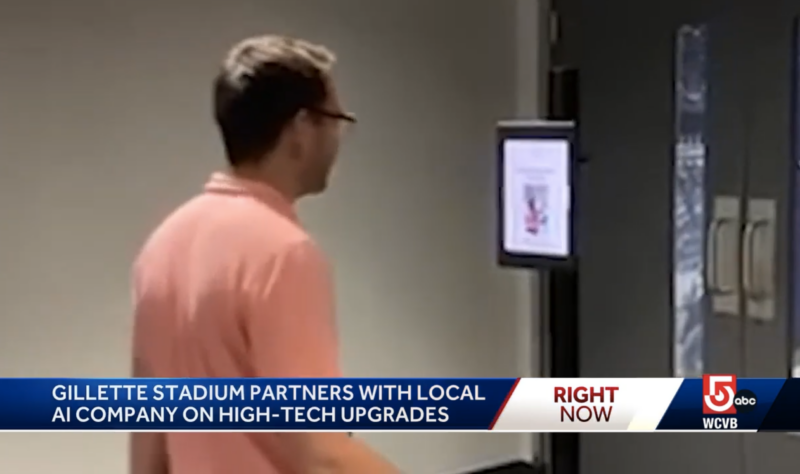
| NWN | AI systems, Facial recognition | Facial recognition for ticketing and entering the stadium, and with vendors throughout the venue | Venues | Data harvesting at scale | Used in Boston’s Gillette Stadium for access control and purchases in food stalls. (CBS News, April 2025) | None reported |
| Ondas Inc. | AI systems, Drones or counter-drone systems | Counter-drone solutions | Cities, borders, venues | Aerial surveillance | The company claimed “its Sentrycs subsidiary has been selected to deploy counter‑drone protection systems at multiple venues hosting the 2026 FIFA World Cup across North America” (Ondas Holdings Inc., April, 2026) | None reported |
| Palantir | AI systems, Big data | Foundry: platform for data unification and business decision-making Gotham: data integration tools for law enforcement and government agencies | Cities, borders, venues | Integration and command | No specific World Cup-related contracts were found. But the company’s products and services are used by Law Enforcement Agencies across US host cities. | 9 |
| Parsons | AI systems, Drones or counter-drone systems, Facial recognition | Javelin Jump Kit: compact, lightweight, and self-contained biometric enrollment and identification station DroneArmor: counter-drone system | Cities, venues | Data harvesting at scale, Aerial surveillance | No specific World Cup-related contracts were found. But the company’s products and services are used by Law Enforcement Agencies across US host cities. | None reported |
| Peregrine | AI systems | Peregrine AI | Cities, venues | Integration and command | Peregrine is used in 400 cities across the US, including the 11 host cities for the 2026 World Cup. (NBC News, May 2026) Their users are primarily Law Enforcement Agencies, for example, the Kansas City Police Department (KCPD) use Peregrine as “the backbone of its fusion center”. (The Times, June 2026) | None reported |
| Robin Radar Systems | AI systems, Drones or counter-drone systems | IRIS drone‑detection radar | Cities, borders, venues | Aerial surveillance | The company announced that “its IRIS drone‑detection radar will be deployed by components of the U.S. Department of Homeland Security, along with state and local agencies, as part of counter‑UAS operations for the FIFA World Cup across North America later this year” (Robin Radar, February 2026) | None reported |
| Seguritech | AI systems, , Big data, CCTV, Drones or counter-drone systems | Saimon Vision | Cities, borders, venues | Data harvesting at scale, Predictive control, Integration and command, Aerial surveillance | The company shared the following message with a video about Saimon Vision on its Facebook page: “The sporting event of the year begins in 4 days. Do you know who protects it? 48 teams. 104 matches. 16 venues. Millions of spectators. And behind each match, a security operation you don’t see. That is our domain. 🔒 #World2026 #SeguritechAttitude” (Seguritech, June 2026, loose translation) | None reported |
| TELUS | CCTV | Axis cameras | Cities, borders, venues | Data harvesting at scale | The city of Vancouver was authorized to negotiate an agreement with TELUS Communications Inc. for potential 12 million Canadian dollar contract, comprising “the deployment of an extensive network of Axis CCTV cameras.” (Vancouver City Council report, June 2025) | 2 |
| Wicket | AI systems, Facial recognition | Facial authentication platform | Venues | Data harvesting at scale | “Wicket has been working as [Atlanta’s] Mercedes-Benz Stadium’s facial ticketing provider since a 2022 pilot”, and expanded the contract in 2024. (Biometric Update, September 2024) | None reported |
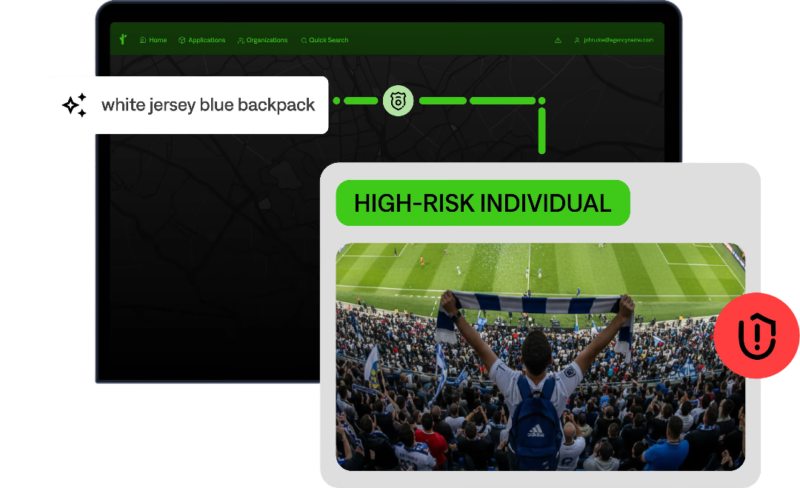
In the US, Flock Safety, Palantir and Clearview AI services were reportedly used on multiple occasions by law enforcement agencies and officers to violate people’s privacy. These companies’ very business model is based on massive data scraping to build a surveillance stack heavily reliant on personal and sensitive data. The legality of this scraping has been challenged in several jurisdictions. L3Harris has faced scrutiny over lapses in downstream due diligence, with surveillance tools allegedly being used by the Russian government and Chinese cybercriminals. As data is integrated, matched, combined and cross-checked, FIFA, companies, and governments did not implement enough mechanisms to prevent data sharing among parties involved in the security of the event, delimiting purpose of use or the duration of data retention.
Some of the companies responsible for the security operations for the tournament have business models that disregards basic rights and protections, and have a long history of violations and breaches. Fans and communities are effectively exposed to risks long after the event is over, with little to no resources made available by FIFA, government agencies, and companies to protect themselves against unlawful or unethical use of their data, or to access redress and remedy measures.
The urbanopticon: Surveillance products across host cities
The first layer of the surveillance stack is the one closest to the pitch. All of the stadiums hosting 2026 World Cup games have CCTV cameras. Many have also adopted drone- and AI-powered video surveillance, facial authentication at entry, and biometric readers collecting data as fans move through the arenas. What happens with this data is far from clearly documented by the parties collecting, storing, and analyzing it.
FIFA’s hospitality privacy policy, for instance, states that the organization will retain personal information for an undetermined period of time, considering applicable laws. The criteria used to set these retention periods are also broad (see Box 1). Fans who opt out of entry via biometric scan pay a hefty price, typically facing slower queues or alternative processes to access the tournament venues, all during a record-breaking summer heat wave.
FIFA’s CCTV privacy notice also broadly defines the individuals and entities with access to this data. This may include FIFA’s employees, “affiliated entities,” and stadium personnel as well as technology service providers (see Box 1). The entity’s notice does not clearly outline the due diligence mechanisms that protect fans from potential rights violations.
FIFA’s Hospitality Privacy Policy
Retention of Information
“We will retain your Personal Information for as long as needed or permitted in light of the purpose(s) for which it was obtained and consistent with applicable law. The criteria used to determine our retention periods include: (i) the length of time we have an ongoing relationship with you and provide the Services to you; (ii) whether there is a legal obligation to which we are subject; or (iii) whether retention is legally advisable (for example, in regard to applicable statutes of limitations, litigation or regulatory investigations so that we can preserve evidence to protect or defend our rights).”
FIFA’s CCTV Privacy Notice
Who can access CCTV footage?
“Access to CCTV footage is limited to authorized persons who need access for the purposes described in this Notice. This may include authorized personnel of FIFA26 or FIFA, affiliated entities, stadium operations personnel (including personnel in the stadium control room, where applicable), personnel in the FIFA Tournament Operations Center, CCTV system or technology providers, hosting providers, maintenance providers, and other service providers who support the CCTV systems. Service providers may access CCTV footage where necessary to operate, maintain, host, or support the CCTV systems. Their access is subject to appropriate contractual, confidentiality, security, and data protection obligations”.
Box 1: FIFA’s Hospitality Privacy Policy and CCTV Privacy Notice
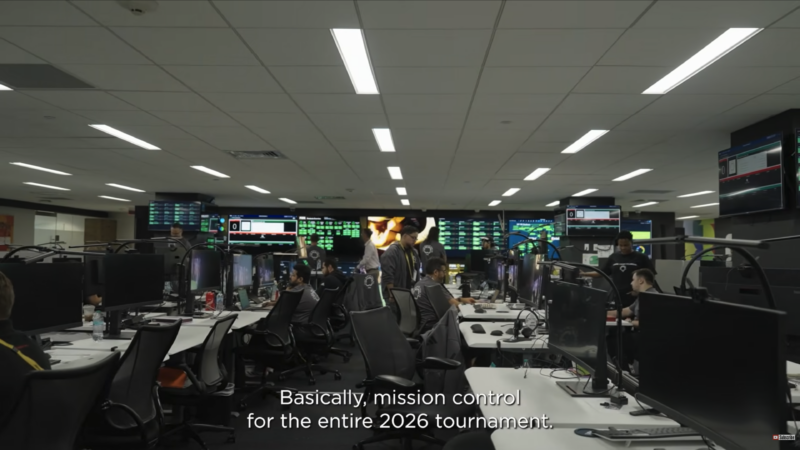
Host stadiums’ legacy surveillance technology is powered by tech products and services that expand their capabilities, integrate systems, minimize human intervention, and (at least in principle) improve law enforcement and security response time. Lenovo, FIFA’s official technology partner, created an Intelligent Command Center, a “centralized, real-time operations platform that gives FIFA a holistic, live view of everything happening across the tournament,” aggregating data from individual venues to identify “tournament-wide trends.” As part of its efforts to carry out data integration and centralize control, Lenovo’s 3D Digital Twins—detailed virtual maps of all 16 stadiums—continuously run crowd pattern identification and predictive analytics to facilitate safety and security interventions.
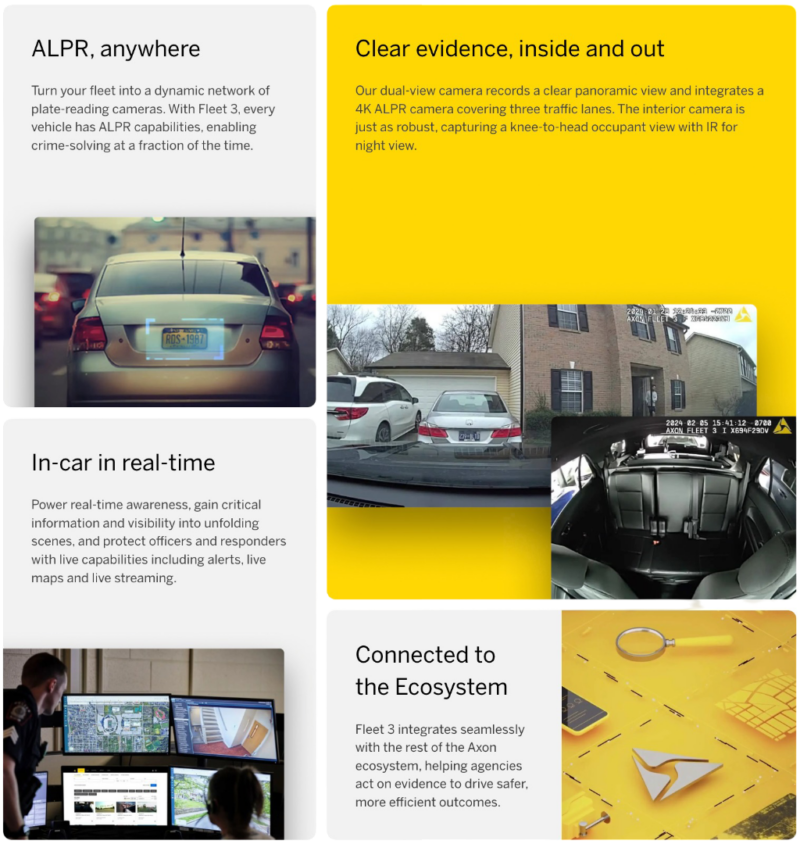
Beyond the stadium concourse, another massive surge of surveillance tech has spread across the landscape: automated license plate readers (ALPRs), a market dominated in the United States by Flock Safety, whose cameras scan billions of images per month. Both Flock and Motorola Solutions, another prominent provider, have faced class-action lawsuits in 2026 alleging severe privacy violations.
All US host cities have a number of ALPRs surrounding their stadiums. WIRED counted more than 650 in just four of those cities (Atlanta, Los Angeles, Houston, and New Jersey). The government of the State of Mexico is using the same technology through the bespoke Nexus AI platform, which relies on a network of 5,000 new cameras “equipped with AI,” featuring biometric and visual identification, tracking, and database cross-referencing capabilities. Authorities have already confirmed plans to keep this technology in place long after the final whistle.
Host cities have boosted other layers of their surveillance tech stack as well. Mexican and US authorities acquired robot dogs to support police surveillance and crowd control. The metallic canines are outfitted with AI systems that allow them to navigate autonomously, transmit live images, and issue commands via a speaker. In the US, numerous states and cities have expanded their CCTV systems using funds allocated to the tournament. In Canada, municipal governments claim the new CCTV infrastructure is temporary, but past sports mega-events show these promises rarely come true.
Drone and counter-drone surveillance has consumed another substantial portion of the host countries’ resources. At least eight companies among those we mapped provided drone-related products or services around the 2026 World Cup. The US has invested 115 million USD in counter-drone measures alone, covering stadiums, vicinities, fan areas, training bases, airports, and other areas. These investments add to the indiscriminate surveillance capabilities watching stadiums and streets alike.
As authorities normalize blanket surveillance as the bedrock of public safety, civil society organizations have denounced the recurring risks and human rights violations associated with its massive deployment. The American Civil Liberties Union (ACLU), for example, urged Seattle residents to “reject mass surveillance”, amid the expansion of technologies that have not proved effective in reducing crime and could instead contribute to “the historic disproportionate over-policing and over-surveillance” of communities of color. Last March, Amnesty International sounded the alarm over the risks of “intrusive surveillance” and “authoritarian practices” during the football event.
During the tournament, these stacked layers of monitoring expose fans and communities to violations, violence, and abuse. But after the floodlights are turned off, the cameras turn to undocumented immigrants, communities of color, and political activists who face the brunt of the risks these products and services create. The intensification of existing surveillance and control systems can quickly entrench discrimination as each layer of the stack puts their human rights in jeopardy.
The new playmaker: AI’s role in the surveillance stack
The combination of video surveillance and AI-powered systems—facial recognition and authentication, ALPR, IMSI catchers, and predictive policing—forms a tech stack with near-total identification capabilities.
Fans cannot attend the 2026 World Cup without being filmed, biometrically identified, and geographically tracked, all while running the risk of having their communications intercepted. These systems will also monitor communities and individuals regardless of whether they attend the event, as people move around host cities and stadium surroundings that are equipped with surveillance tech. Research shows these technologies have either been used to disproportionately target racial, ethnic, and socioeconomic minorities or have significantly higher error rates for them, creating even greater risks for marginalized communities moving through these spaces.
The 2026 tournament features heavy use of legacy infrastructure in combination with edge AI, a collection of distributed systems that process broadcasting and surveillance data locally at venues rather than routing it to central servers.
On the field, edge computing interacts with motion sensors and tracking cameras worn by referees to assist with officiating decisions and generate new camera angles for viewers (notably Lenovo’s “Referee View”). Off the field, some cameras, sensors, and other equipment used to monitor the event process data at each installation point, with no evidence of centralized oversight. Decisions take place locally, at venues, streets, and command centers. This reduces latency and operational costs, but it also distributes decision making across thousands of points.
This has meaningful implications. Distributed surveillance infrastructure is harder to oversee or control. Compounded by weak privacy policies, unclear grievance mechanisms, and lax regulation, this leaves fans and regular people more vulnerable to data harvesting and privacy breaches at every layer of the surveillance stack.
A person flagged by a facial recognition system in the vicinity of a football arena is not able to know exactly which company or product identified them, on what basis, and who will access such data. The AI-powered surveillance stack deployed for the tournament constitutes a unified, full-circle tracking cycle in which the data is collected, stored, and could potentially be used to train systems for future use, relying on on-site distributed infrastructure to support data operations. This makes traceability and auditability much more difficult than in centralized systems.
Outside the arenas, facial recognition data feeds into predictive policing systems, while predictive systems flag individuals to law enforcement. In turn, ALPR data tracks individuals’ movements and flows back into integration platforms, together with law enforcement location data. Edge computing across devices enables real-time decisions; real-time decisions largely remove the possibility of human review. When combined, speed, scale and automation significantly increase the risks of reproducing systemic bias, massive targeting, and rights violations.
As data is integrated into models and inference outputs, it may be stored in databases operated by law enforcement and government agencies. In this process, even if personal data retention and deletion is available for specific surveillance systems such as CCTV, the output generated at command centers or by individual companies is likely to become a permanent record, accessible in the future by authorities and companies. The downstream risks are even greater with firms such as Palantir, which compile different sources of data and continuously transform it. These outputs could be used to wrongfully or unfairly target communities and individuals through predictive policing, discriminatory flagging, or association-based targeting.
In this World Cup, AI systems are increasingly being integrated at the infrastructure level, with more power to define outputs and outcomes and insufficient due diligence mechanisms. For instance, generative AI systems have been deployed for live translation based on body camera audio captured by law enforcement. Robot dogs patrol and record videos. Predictive models flag individuals as potential threats before crimes or incidents occur. Counter-drone systems respond to detected aircraft automatically, without waiting for human authorization. Given the documented biases in the data used by similar systems, there is significant risk that the AI-powered surveillance stack set up for this event will replicate or amplify those biases and potentially violate people’s rights well beyond 2026.
Intercepted: Telcos as the invisible infrastructure of World Cup surveillance
While surveillance vendors are often the visible face for the monitoring and security of mega-events, telecommunications companies usually hold a quieter but a more foundational form of power. They provide the network connection infrastructure and control the metadata and location signals that make real-time surveillance possible and scalable.
In September 2024, Verizon, a dominant US telecom carrier, was named the “official telecommunication services sponsor” for the 2026 World Cup. To support live broadcasting, mobile services and high-volume data transmission during matches, Verizon completed network upgrades, including “adding more 5G spectrum to boost capacity by an estimated three to five times across all host stadiums” and installing “thousands of antennas under seats.” In addition, the company rolled out Verizon Frontline, advertised as a secure service developed “in partnership with public safety officials and agencies” to ensure uninterrupted communications for those agencies.
However, connectivity and public-safety communications are only part of the story linking telecom providers with the World Cup. As a sector, telecommunications companies operate at the infrastructure level, serving as the medium through which surveillance becomes technically possible.
Surveillance tools such as CCTV cameras may be installed and operated by the stadium management, law enforcement, and private security vendors. But many of these surveillance systems depend on telecom infrastructures— including fiber optic cables, 5G networks, Wi-Fi, and network operation centers—to transmit the raw data collected for storage, distribution, and analysis.
This makes telcos powerful intermediaries in the overarching surveillance system. Without the underlying network infrastructure, security cameras, drone and counter-drone systems, biometric accreditation tools, and other surveillance technology may all begin to fail in real time. These surveillance systems rely on telecommunication networks to transmit video footage, route mobile data, generate location information, and connect dispersed devices and command centers. In this sense, telecom network infrastructure helps transform isolated monitoring tools into an integrated, scalable, and intertwined surveillance system.
Telcos are also gatekeepers of a vast amount of user data, which they process as mobile and internet service providers (ISPs). When a device connects to the mobile network, telcos immediately start to collect user information, such as geolocation data, network logs, and phone call durations. During matches, this data can become especially attractive for law enforcement agencies and affiliated private contractors for crowd control, migration enforcement, criminal investigations, protest monitoring, and intelligence collection.
Depending on applicable laws, telecom operators may be legally required to assist law-enforcement and national-security authorities by disclosing personal information, communication records, location data, and more. In some cases, they may also be called upon to intercept communications or comply with network blocking orders. Government agencies are expected to follow all relevant legal procedures and protocols, including providing evidence to support their requests. On the receiving side, many in the human rights community expect telcos and other companies to verify the legal basis and scope of each request, follow a clear and consistent process for handling them, and push back against unlawful or improper requests.
The 2026 RDR Index: Telco Giants Edition assessed two telcos headquartered in North America: AT&T in the US and América Móvil in Mexico. Both companies published detailed information about their process for responding to government demands for user information. However, América Móvil’s disclosures were more opaque and less comprehensive than AT&T’s. The Mexican company achieved a breakthrough in its transparency by delivering country-by-country data on government demands for the first time in its history. However, it did not specify whether these demands were for access to users’ information or to restrict content and accounts. This kind of aggregation introduces uncertainty that can cause human rights risks to accumulate unnoticed.
Although Verizon was not included in the 2026 RDR index, as the event’s official telco partner and a US-based company, it should be held to comparable transparency and accountability standards as AT&T. Verizon publishes transparency reports biannually on law-enforcement demands on user data.
The 2026 World Cup created an unusually intensive security and information-sharing environment for safety and surveillance purposes. When authorities are under pressure to obtain and share information in real time, will every government demand that telecom operators receive undergo the same level of careful legal and procedural review before the company complies? As gatekeepers for both communications infrastructure and sensitive user data, can telcos hold the line?

The poisoned legacy of the mega-event: Normalizing the surveillance stack
The mega sporting events of the last decade and a half established a dangerous precedent when it comes to the deployment of surveillance tech. In most, if not all cases, governments have used the outsized urgency, attention, and commotion around these events to fast-track legislation, expand the surveillance powers of law enforcement agencies, and acquire products circumventing the usual public bidding processes, under the justification of supporting the safety and security of fans and visitors. The infrastructure built for these events becomes part of the urban fabric. But this permanence is usually accompanied by changes in how authorities perceive the role of technology for policing, normalizing its use and expansion, often without clear and transparent policies that could justify their goals as necessary and proportionate.
During and after the 2010 World Cup in South Africa, multiple reports pointed to an increase in police harassment, community displacements, and police brutality while surveillance tech was deployed across the country and remained in use following the championship. The World Cup was not the beginning of surveillance in downtown Johannesburg, but the event was an inflection point, as both the number of cameras and their geographic coverage increased.
A decade later, a new type of digital apartheid is felt by millions of South Africans going about their lives throughout Johannesburg, where areas beyond the city centre are increasingly under surveillance. On the other side of the country, Cape Town’s metropolitan area has an estimated 2,000 cameras, all of which are linked to unregulated private companies. Notably, the majority of cameras belong to private surveillance companies that have offered no public consultation process. From sharing the joy of football fever to sowing division instead of growing community, the legacy of hosting mega-events creates a blueprint for others to follow.
In Brazil, as the country prepared to welcome the 2014 Men’s World Cup and the 2016 Olympic and Paralympic Games, the government acquired facial recognition goggles, drones equipped with license plate readers, surveillance balloons, and 2,000 new cameras. Authorities also set up structures called Integrated Command and Control Centers (CICCs), each connected to a network of up to 4,000 cameras that collated images and data. The centers, although with difficulties and partial consolidation, were absorbed by state security structures in the country. The products and services obtained by authorities are now scattered across jurisdictions and supervising entities. Brazil’s numerous federal and state police forces continue to enjoy access to the technology that was bought more than ten years ago, as does the military.
In Qatar, the 2022 World Cup served as pretext to expand a national surveillance stack. The government deployed CCTV, drones, and facial recognition systems under the justification of improving security. BHRC and media outlets documented how this surveillance infrastructure was used not just for event security, and how it may disproportionately affect minority groups such as women, people of color, and people who identify as members of the LGBTQ+ community. Years after the tournament ended, these biometric systems remain operational, creating a permanent surveillance ecosystem.

In May 2023, France introduced the 2024 Olympic and Paralympic Games Act, the first legislation of its kind in the country that aimed to legalize algorithmic video surveillance. La Quadrature du Net, a non-profit organization that promotes and defends digital rights, described the Olympic and Paralympic games as a catalyst for extraordinary surveillance policies and measures that are normalized without enough oversight and debate. When the French government authorized the use of algorithmic video surveillance through 2025, long after the games were over, it set a worrying precedent for many sporting events to come.
In the US, Mexico and Canada, we found little evidence of a clear definition of if and how the newly acquired surveillance stack would be dismounted after the 2026 World Cup ends. The notable exceptions to this were Boston, Toronto, and Vancouver. As in South Africa, France, Brazil, and other countries, activists and civil society organizations have taken on the mantle of resistance, emboldening and supporting communities affected by continuous, asymmetrical surveillance.
The 2026 World Cup follows a well-recognized pattern: governments heavily and rapidly boosting the deployment of surveillance technologies across cities, borders and venues, with insufficient processes in place to assess risks and protect marginalized communities. These governments are supported by companies offering products and services that were not designed following international human rights standards. The entire cycle further normalizes mass surveillance as the status quo.
The fields are ours: Circumventing the surveillance apparatus
With the 2026 Men’s World Cup, the United States, Mexico, and Canada risk adding a chapter to a legacy of sportswashing where “the beautiful game” is used to hide an ugly underbelly of human rights abuses, corruption, and repression. The Trump administration is hosting an event to bring the world together even as its policies divide the nation, supporting abusive and discriminatory border control and immigration enforcement measures. Between January 2025 and March 2026, at least 43 people have died in Immigration and Customs Enforcement (ICE) detention.
In the face of a housing and cost-of-living crisis, many Canadians were surprised and angry at the estimated price tag of 1 billion Canadian dollars that came with hosting the World Cup. Some argued that the funds could have been better spent on addressing the needs of Canadians such as healthcare or other public services. Furthermore, the forced displacement of unhoused people living in the “beautification zone” of 2 km around the Vancouver stadium put the rights of those affected at risk. Renters were also vulnerable to the actions of landlords who might decide to evict them to capitalize on short-term rentals during the World Cup games.
Early in 2026, US pressure on Mexico led to the killing of a cartel leader by the Mexican Armed Forces. The ensuing wave of violence raised concerns about whether Mexico would be able to host the World Cup. In response, the Mexican government pledged to deploy close to 100,000 security force members during the event. In Guadalajara, protestors are steering international attention to national human rights abuses, including the climate impact of Hyundai, one of the World Cup’s main sponsors, as well as the plight of close to 130,000 missing people who questioned corrupt government officials or drug cartels.
International sporting events have a long history of community protest against unaccountable power. Under the guise of neutrality, the organizers of mass events have long discouraged or even banned athletes from speaking out on politics and human rights. In Mexico, groups like the Zapatista Army of National Liberation (EZLN), which advocates for autonomy from capitalism and the empowerment of local Indigenous communities, have used the World Cup to call attention to the consequences of commodification, commercialization, and impunity for human rights abuses. Ahead of the 2026 World Cup, an EZLN spokesperson captured the moral dimensions of the occasion: “[F]ootball, like almost everything, is caught between crime and resistance, between authoritarianism and rebellion, between business and play, between barbarism and nobility.”

In 2026, the spirit of rebellion in football has not been stifled. Fans and activists around the globe are coming together to take a stand and shine a light on injustice across host countries. In the United States, Dignity 2026 is an example of a civil society coalition representing millions of stakeholders working closely with its Mexican and Canadian counterparts to urge FIFA to protect affected communities.
At a local level, fans are also organizing to keep the beauty in the game. The “No ICE in the Cup” campaign is co-led by a big tent coalition that includes community organizers, lawyers, artists, athletes, and people of diverse faiths. The campaign is using art, community events, and training to keep communities safe while enjoying the festivities of the World Cup. Our Copa is a bilingual campaign focused on keeping fans safe in an increasingly hostile environment. In Mexico, journalists are coming together to protect each other while speaking truth to power about protests and resistance during the World Cup.
Many of these campaigns view their movements as an interconnected approach to addressing the failures of the world’s governing system. For example, protestors in Vancouver came together to protest FIFA for its enabling role in various manifestations of human rights risks, including surveillance as well as housing and labor abuses. Central to many of the movements is resistance to surveillance and the extractive business models of tech companies, which have often acted as vectors for militarisation and business partners to authoritarians.
These interconnected movements are aware that the playing field is skewed against them, yet they remain undeterred. In the US, activists and hackers have successfully circumvented technologies deployed by an immigration enforcement agency whose budget exceeds the expenditures of all but 15 of the world’s militaries.
Hacker communities are testing and sharing increasingly creative ways to circumvent the surveillance stack, including ways to avoid Flock Safety cameras or fight street-level surveillance. The State of Surveillance runs an independent newsroom with advice on how to avoid ICE surveillance while traveling. Activists are experimenting with anti-surveillance makeup and clothing, and sharing tools such as browser audits and social media self-defence checks to bridge communal and individual resistance.
Away from the advertisers in megastadiums and the millions of dollars that pour into FIFA’s headquarters in Zurich, people on the frontlines are not afraid to resist technology that is imposed on them without regard to their communities. People continue standing up to defend their right to shape their communities in a way that serves them, as opposed to serving corporate interests that seek to extract and maximize profit over respecting human rights.
In 2026, FIFA as well as its network of public and private affiliates appear to have embraced the surveillance stack, posing additional, avoidable risks to communities and fans under the guise of protecting them. But activists worldwide are connecting their causes and using the World Cup as an opportunity to highlight the insidious social and economic impacts of hosting the largest football event in the world. They form a distributed collective push to topple the surveillance stack that connects Big Tech’s extractive business model to labor, housing, and safety risks for all.
Once the last whistle is heard in the 2026 World Cup final, it is critical for communities to keep resisting the unchecked expansion of surveillance. Preparations for the 2028 Los Angeles Olympic and Paralympic Games are already underway, with politicians claiming that the scale of these events requires “unprecedented” coordination and strengthening of “cybersecurity and threat detection capabilities.” The Los Angeles communities closest to the venues are collaborating closely with each other and with international anti-Olympics groups that have highlighted the burden of financial and societal costs that come with hosting the mega-event.
Drawn in by the allure of being a host country, governments around the world continue to invest in surveillance for mega-events instead of addressing the most pressing needs of vulnerable communities. This pattern will likely continue, but so will the resistance. And the counter-surveillance movement is led by people working to steer the focus back to what makes sport beautiful in the first place: people, passion, and a sense of community.
Footnotes:
- In this report, we refer to surveillance stack as a set of technologies that “surveil indiscriminately, and which are rarely governed by a warrant requirement or any of the traditional legal oversight mechanisms”, guiding decisions about “who to police, where to police, how to police, and when to police” (Southerland, 2022, p. 10). ↩︎
- “Artificial Intelligence (AI) at the edge is the utilization of AI in real-world devices. Edge AI refers to the practice of doing AI computations near the users at the network’s edge, instead of centralised location like a cloud service provider’s data centre”. (Singh & Gill, 2023). ↩︎
- WCAG (Web Content Accessibility Guidelines) are a set of recommendations on improving web accessibility, especially for people with disabilities. The Guidelines were developed by the World Wide Web Consortium (W3C), the most prominent international standards body for the Internet. ↩︎