26 Apr 2018 Index finds tech companies lack transparency about policies affecting privacy and online speech

Click image to watch video of event (photo by New America).
Despite some notable improvements, the world’s top tech companies still fail to tell us enough about policies affecting freedom of expression and privacy, according to Ranking Digital Rights director Rebecca MacKinnon, who presented key findings of the 2018 Corporate Accountability Index on Wednesday, April 25th at Columbia University in New York City.
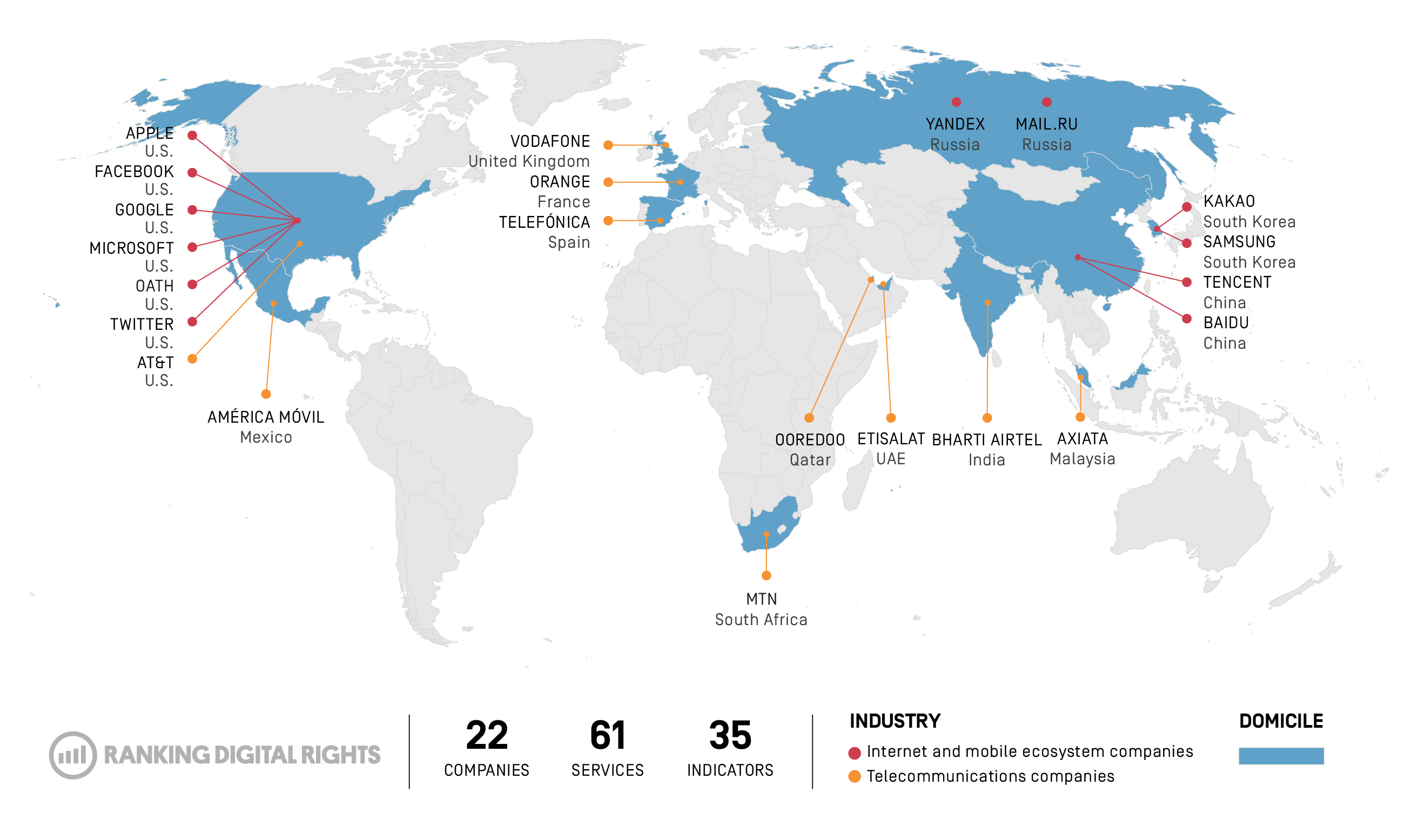
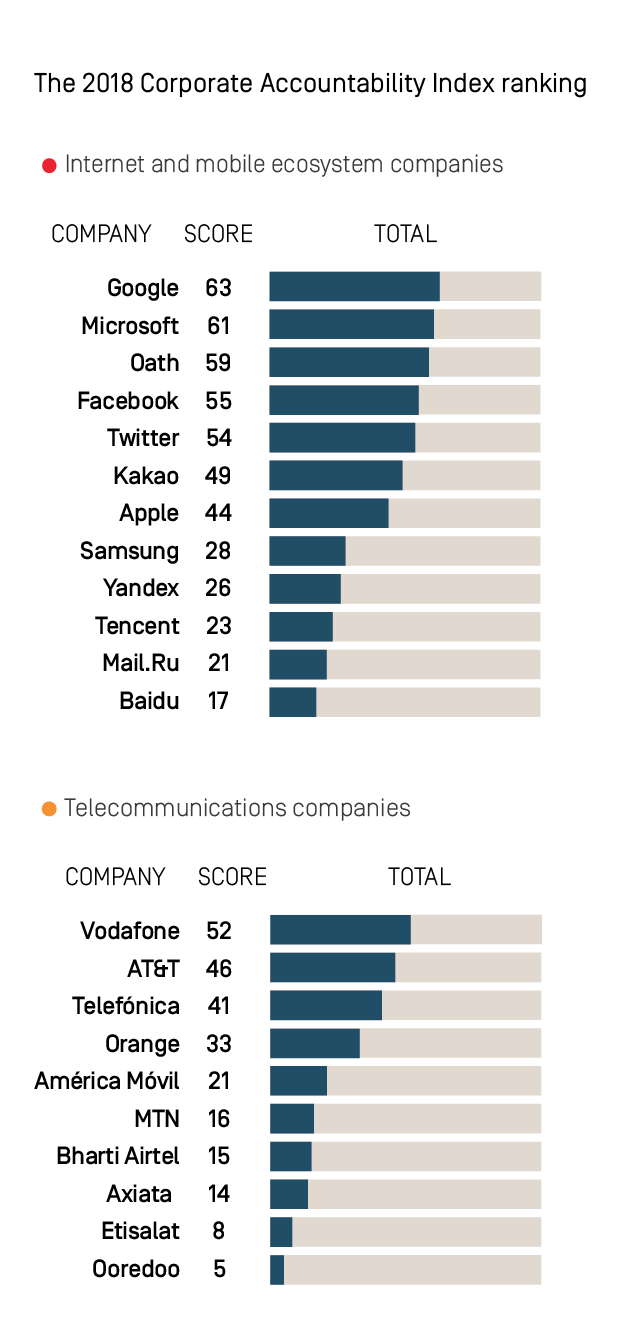
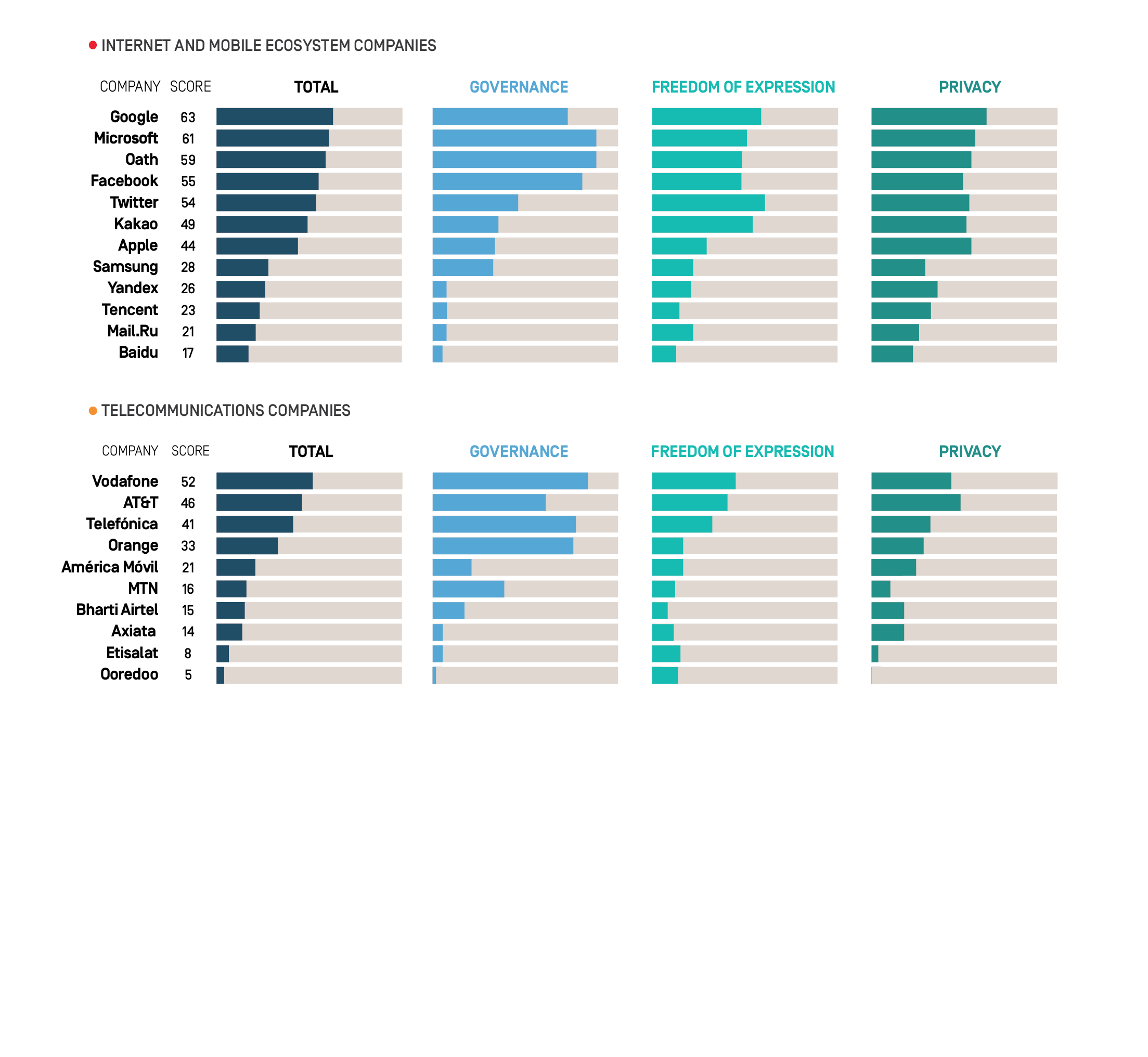
The 2018 Corporate Accountability Index ranked 22 of the world’s most powerful internet, mobile, and telecommunications companies on their disclosed commitments and practices affecting users’ freedom of expression and privacy. The 2018 Index used the same 35 indicators as the 2017 Index to evaluate the same 22 companies across three categories: Governance, Freedom of Expression, and Privacy.
Results showed that while 17 of the 22 companies evaluated made some improvements over the last year, most companies still did not reveal enough about key policies affecting freedom of expression and privacy for users to understand the risks of using their products and services. Too few companies made users’ expression and privacy rights a central priority, and most failed to disclose enough information about how they handle user data, or how they police online content and speech.
While some companies made genuine improvements, “there is still a long way to go,” MacKinnon said. “We need to know who can exercise power over our digital lives and under what circumstances, we need to be able understand who’s exercising this power if we’re going to hold power accountable.”
Numerous companies, including Apple, improved their disclosure of how they respond to government requests to restrict content or block user accounts, MacKinnon explained. But most companies still failed to provide sufficient data about the volume and nature of content or accounts they restrict or block for violations to the company’s own rules.
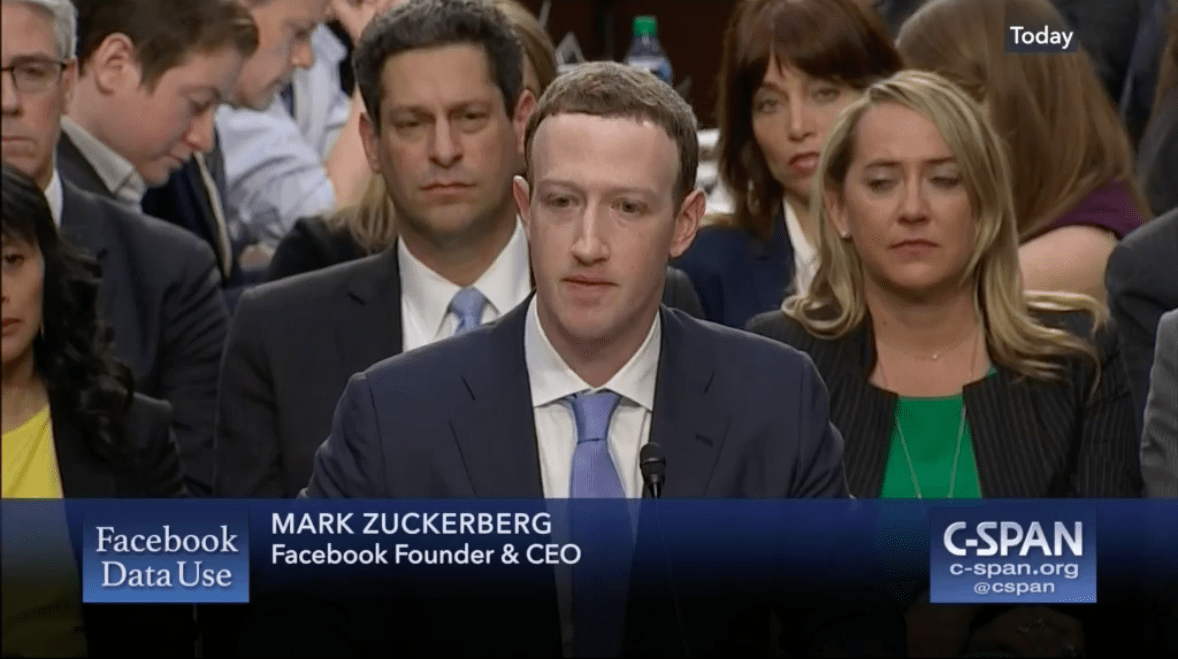
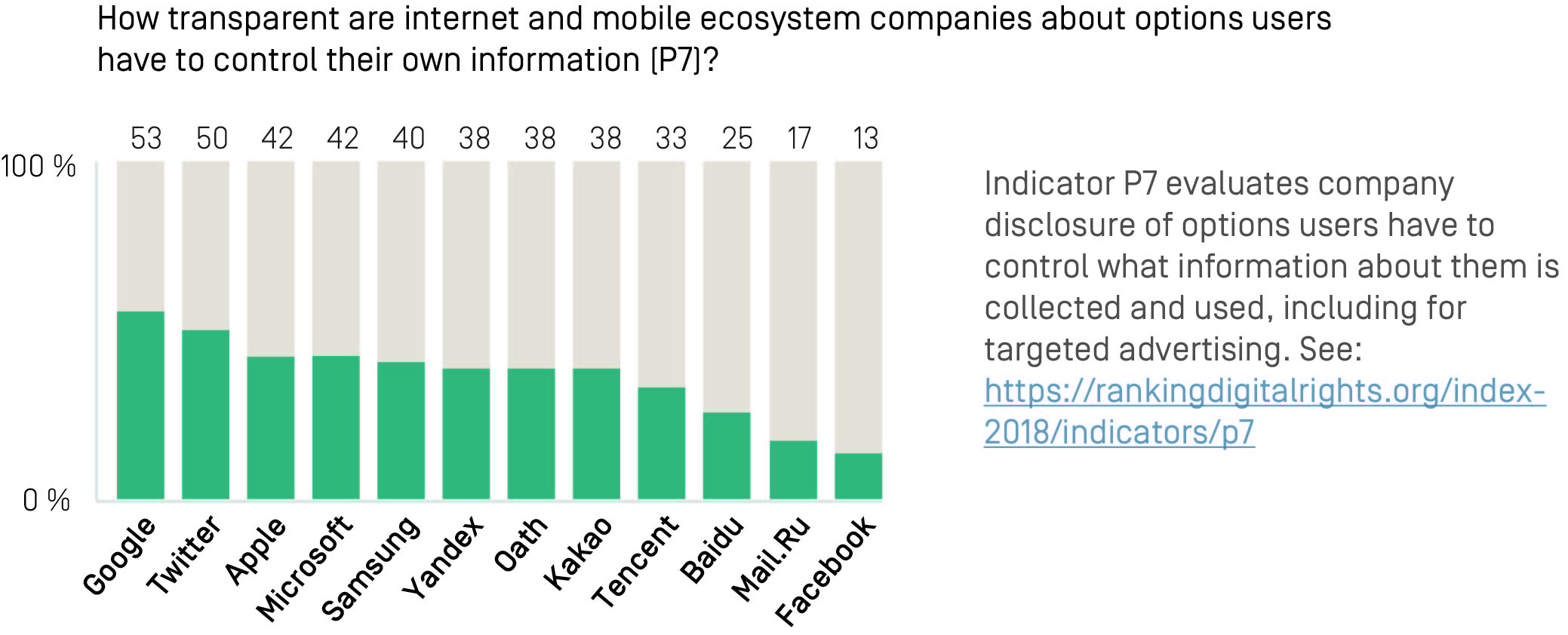
While Twitter revealed more than any other internet and mobile ecosystem company about how it handles user information (P3-P9), it still “didn’t even get a passing grade,” Mackinnon said. Facebook, which has come under increased scrutiny over its lack of transparency in how it handles user information, disclosed less than any other internet and mobile ecosystem company—including Chinese companies Baidu and Tencent, and two Russian companies, Mail.Ru and Yandex—about options users have to control their own information (P7).
MacKinnon noted that companies that are members of the Global Network Initiative, a multi-stakeholder initiative that helps companies in the ICT sector protect freedom of expression and privacy, disclosed stronger commitments to users’ rights at the governance level than non-GNI member companies, including by conducting risk assessments that allow companies to manage and mitigate the possible human rights harms of their products and services. However, Index results showed that companies across the board—and regardless of whether they were members of GNI—lacked clear disclosure of grievance and remedy mechanisms allowing users to issue complaints against companies for breaches to their freedom of expression and privacy.
The presentation was followed by a discussion moderated by Emily Bell, director of the Tow Center for Digital Journalism, and joined by Anil Dash, chief executive officer of Fog Creek Software, and Ellery Biddle, director of Global Voices Advox.
A video of the full event can be viewed here.
The 2018 Index also includes recommendations for governments, questions for investors, and recommendations for companies. To view and download the complete report, including interactive data and analysis, company report cards, methodology, raw data files, and other resources for download, visit rankingdigitalrights.org/index2018.