
RDR is now an independent initiative. Our website is catching up.  Read our announcement →

Digital rights groups in India and Pakistan have adapted the Ranking Digital Rights Corporate Accountability Index methodology to evaluate if and how telecommunications and internet companies in those countries disclose commitments to users’ freedom of expression and privacy.

The Centre for Internet and Society, an internet research institute based in India, applied the 2017 Index methodology to evaluate eight telecommunications and internet companies operating in India. Findings showed while companies demonstrated some commitment to users’ privacy, most fell short in key areas. The organization held an event in January 2017 to launch the report as well as a rankathon for participants to learn more about the companies evaluated and to provide feedback on the methodology and ways to adopt it for future research.  

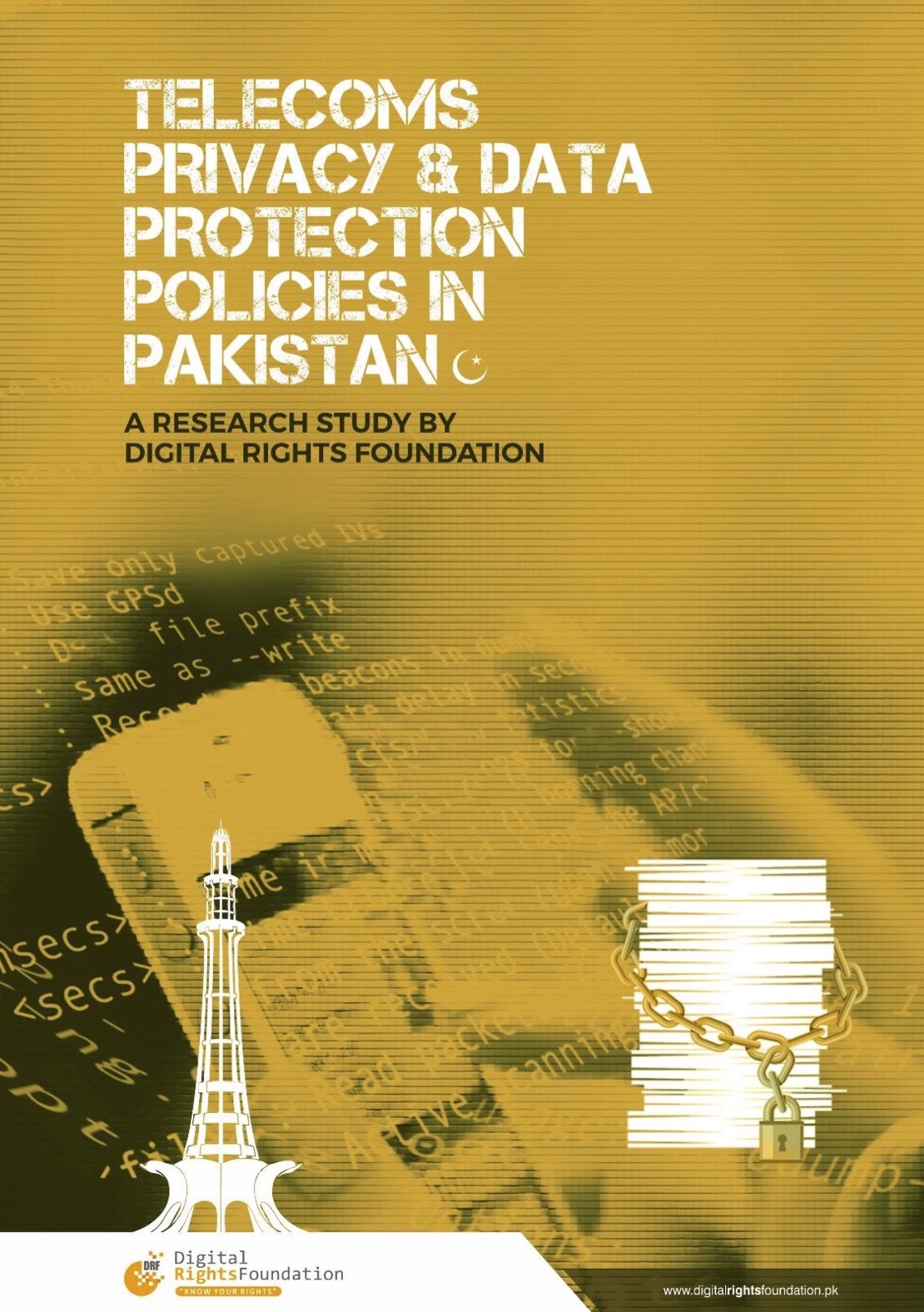
In December 2016, Pakistan-based Digital Rights Foundation published a study examining privacy-related disclosures of five telecommunications companies, based on privacy indicators adapted from the Index methodology. Findings showed that not all privacy policies were available in Urdu or other languages commonly spoken in Pakistan, and that company policies for responding to government requests for user data were often unclear. The organization’s executive director, Nighat Dad, discussed some of these findings at our roundtable session at RightsCon on how to conduct research and advocacy focused on ICT companies.

These types of projects using the Index methodology allow for more in-depth analysis of how companies in different countries or regions commit to respecting users’ rights. We encourage researchers and civil society to adapt the Index methodology to launch research initiatives evaluating company disclosures of policies affecting users’ freedom of expression and privacy in their own countries and contexts.

The Corporate Accountability News Roundup is a new series by Ranking Digital Rights that highlights key news related to tech companies, freedom of expression, and privacy issues  around the world.

Twitter takes on Trump

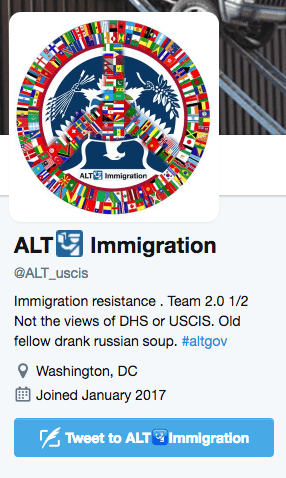
According to Twitter, the Trump administration last week withdrew its attempt to force the company to reveal the identity of one its users. The account, @ALT_USCIS, is one of several “alt agency” accounts created after President Donald Trump took office, and which tweets criticisms of the administration. In response, Twitter announced it was suing the US government on grounds the demand was “unlawful and unenforceable because it violates the First Amendment rights of both Twitter and its users by seeking to unmask the identity of one or more anonymous Twitter users voicing criticism of the government on matters of public concern.” Twitter dropped its lawsuit after the government withdrew the summons.

The Ranking Digital Rights 2017 Corporate Accountability Index looks for companies to disclose their processes for responding to government requests for user information, including if the company carries out due diligence on government requests before deciding how to respond, and commits to push back on inappropriate or overbroad government requests. This recent case is an example of Twitter implementing these commitments. Our research showed that Twitter clearly disclosed its processes for responding to government requests for user information (P10) and also topped all internet and mobile companies evaluated for its transparency reporting on the government and private requests it receives to hand over user information (P11).

In Europe: bans on encryption, hate speech

The EU Justice Commissioner Věra Jourová has indicated the European Commission will propose new rules this June allowing law enforcement to access information from encrypted apps. This follows pressure from the governments of France, Germany, and the UK–including the recent call from UK Home Secretary Amber Rudd’s for police to be able to access encrypted chats from WhatsApp and similar services. However, as technical experts have continued to caution, allowing such access would prevent companies from being able to deploy secure end-to-end encryption and would put user privacy at risk. In our recommendations for companies, we note that except where permitted by law, companies should publicly commit to implement the highest encryption standards available, including end-to-end encryption. The EU’s proposed rules could prevent companies from being able to do so.

Germany’s cabinet has approved a plan that would fine social media networks for not removing hate speech content quickly enough. This plan raises numerous freedom of expression concerns, and puts companies, rather than courts, in the position of determining what speech is legally permissible. As noted in our recommendations for governments, authorities should limit legal liability imposed on companies for their users’ speech and other activities, in consistency with the Manila Principles on Intermediary Liability.

New rumors about Google’s return to China

The South China Morning Post reported that Google is engaged in talks with the Chinese government to potentially re-enter the Chinese market with certain services, such as Google Scholar. Google has not confirmed or commented about these discussions or whether or not it plans to re-enter China. However, the company did announce that users in China can now download the Translate app, which the Washington Post writes may be a signal that the company is slowing moving back into the Chinese market. In 2010, Google formally withdrew from China and shut down its Chinese-language search engine, citing concerns over censorship. Google’s products are currently blocked by the Chinese government’s “Great Firewall” and are not available to Chinese users without use of censorship circumvention technology.

Tech companies should conduct human rights impact assessments (HRIAs) before launching new services or entering new markets, to identify any risks to user free expression and privacy and take necessary steps to mitigate these risks. This is particularly important before launching any services in markets, such as in China, where the government has a record of human rights abuses.

As our research in the 2017 Index showed, Google expressed a commitment to carry out HRIAs, stating: “Prior to localizing in a new market, the company approach is to first examine the government’s record with respect to freedom of expression and privacy by consulting reports prepared by NGOs and analyzing the laws that are relevant for freedom of expression and privacy in that country.” Therefore, if reports that Google is considering re-entry into China are true, Google should live up to its stated commitments and be carrying out human rights impact assessments that will help it determine whether or how its presence in China may change in the future.
Our research indicates that although many aspects of Chinese companies’ poor performance in the 2017 Index can be blamed on China’s legal and regulatory environment, there are some areas in which companies still have room to improve their disclosures on certain privacy and free expression issues. For more on this, check out our analysis comparing free expression and privacy disclosures from Baidu and Tencent.

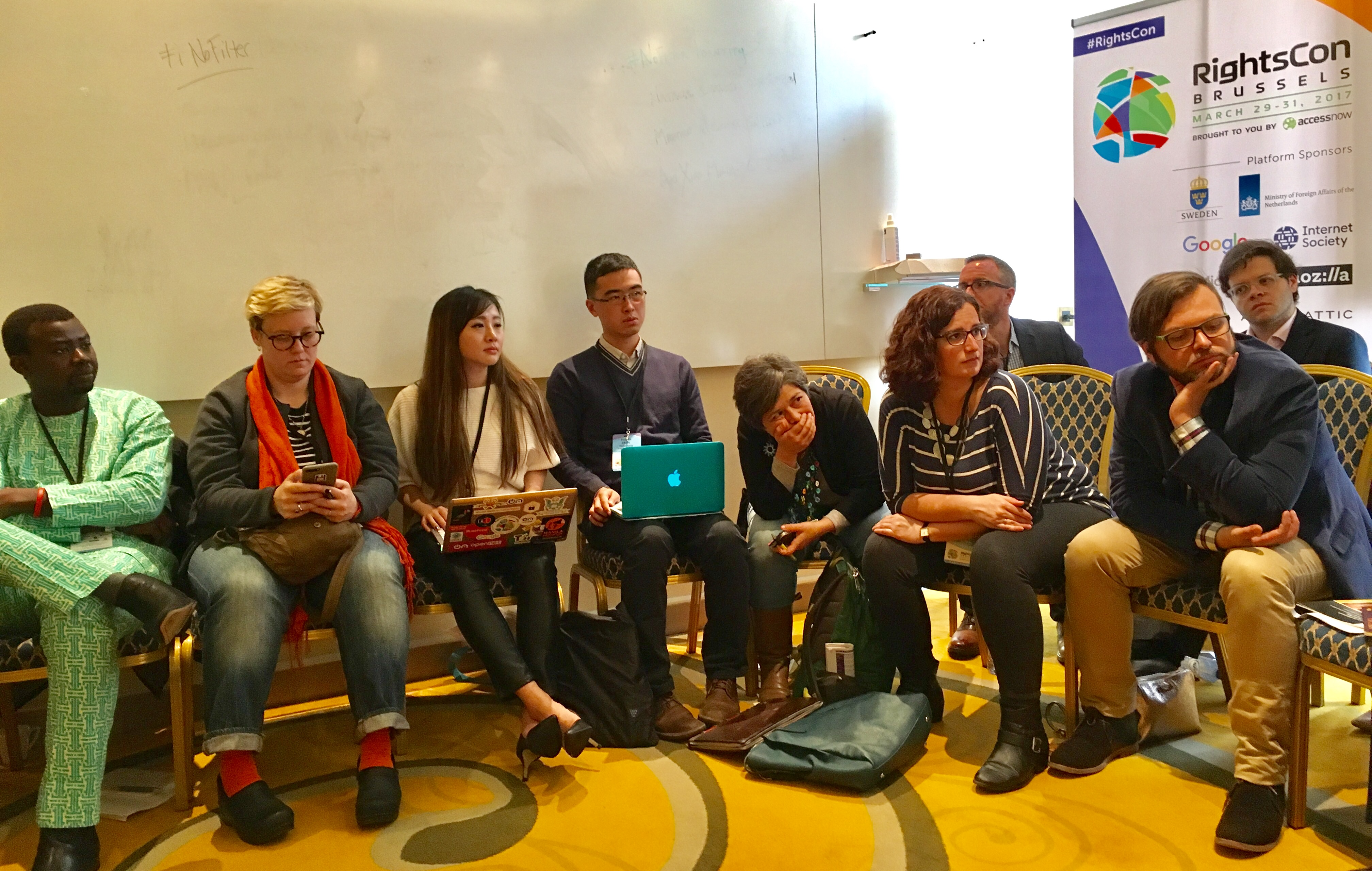
Corporate transparency is essential to building public trust, according to Annette Fergusson, head of Vodafone Group’s Sustainable Business unit, who spoke on a panel for the European launch of the Ranking Digital Rights 2017 Corporate Accountability Index at RightsCon in Brussels on March 29.

The event featured Ranking Digital Rights (RDR) project director Rebecca MacKinnon, who was joined by a group of panelists to discuss results of the 2017 Index, which ranked 22 of the world’s largest internet, mobile, and telecommunications companies on their disclosed commitments to users’ freedom of expression and privacy. Along with Vodafone’s Fergusson, panelists included Silvia Grundmann, head of the Media and Internet division at the Council of Europe, Adam Kanzer, managing director of Domini Impact Investments, a socially responsible mutual fund, and Afef Abrougui, a researcher with Beirut-based Social Media Exchange Network (SMEX) and an RDR research affiliate. The session was moderated by Malavika Jayaram, executive director of the Digital Asia Hub, an internet research center based in Hong Kong.

Panelists discussed why companies should be transparent about policies affecting users’ freedom of expression and privacy. According to Fergusson, companies need to be transparent in order to gain users’ trust: “Without trust, we don’t have a social license to operate,” she said. Vodafone tied with AT&T for the top spot among the ten telecommunications companies ranked in the 2017 Index. Vodafone earned the highest score among telecommunications companies on the Index’s governance indicators, which measure a company’s institutionalized commitments to human rights, including to freedom of expression and privacy.

While transparency is essential, companies should also work to ensure that human rights commitments made at the parent level are followed through at all levels of the company, according to Abrougui. Telecommunications companies, for instance, can have different policies, and varying levels of policy disclosure, in the different markets in which they operate, she said.  

Kanzer noted that while there is a difference between measuring company disclosure of their policies and measuring their actual practices, policy transparency is an important first step.

Talking so companies will listen, listening so companies will talk

Also at RightsCon, RDR senior research fellow Nathalie Maréchal led a roundtable discussion called “How to Talk So Companies Will Listen, and Listen So Companies Will Talk: Doing Company Advocacy and Research.” The session brought together researchers, advocates, and industry representatives to share best practices for communicating their research or advocacy initiatives to companies.

Participants shared their experiences and strategies for engaging with companies through their work on a variety of projects, including the Fundación Karisma’s and Digital Rights Foundation’s research evaluating the privacy policies of telecommunications companies in Pakistan, and OpenNet Korea’s work with Citizen Lab researching the Korean app “Smart Sheriff.” UCLA professor Sarah Roberts also offered insights into her experiences engaging with companies as part of her research on commercial content moderation. Strategies for company engagement depend on the company and political contexts, and can include building long-term relationships with human rights allies within companies, according to participants.

Michael Samway, former Vice President and Deputy General Counsel at Yahoo! Inc. who founded the company’s Business and Human Rights Program, noted that trust between advocates and companies is only formed through years of engagementand that for advocates, it is crucial to have practical solutions in mind before approaching a company.  

Samway, who serves as an RDR advisory board member, was also interviewed at RightsCon for a podcast discussion about evolution of the  broader business and human rights movement, and how advocates and other stakeholders can achieve meaningful engagement with companies.

This year’s RightsCon event in Brussels brought together 1,500 participants from 100 countries, according to event organizer Access Now. We look forward to seeing everyone next year at the seventh annual RightsCon conference in Toronto!

Since its release on March 23, the 2017 Ranking Digital Rights Corporate Accountability Index has received attention from NGOs and media outlets around the world.

According to Cynthia Wong of Human Rights Watch, the Index “provides users with a crucial assessment about company policies, and a roadmap for the basic standards firms must meet if they hope to earn our trust by respecting our privacy and freedom of expression.”

Ranking Digital Rights (RDR) partner Access Now highlighted the Index’s findings showing that telecommunications companies lack transparency about their processes for responding to network shutdown requests from governments. “Telcos can often be required to shut down the internet at risk of losing their licenses to operate, but still have options to push back against governments,” according to the organization. “Ranking Digital Rights illuminates many ways for telcos to increase transparency on their shutdown policies and practices.”

R3D, a digital rights organization based in Mexico, also published a piece spotlighting the performance of Mexican telecommunications company América Móvil, which ranked fifth out the 10 telecommunications companies evaluated in the 2017 Index.

The Global Network Initiative (GNI) issued a statement highlighting a key Index finding that GNI and Telecommunications Industry Dialogue (TID) members were among the top performers in the Index.

Index findings were also reported in Yahoo Finance, Observer, Media Power Monitor, Vocativ, Global Voices Advox, Entrepreneur, and CSO Australia. The China Digital Times and Hong Kong Free Press reviewed the differences between the two Chinese companies evaluated, Baidu and Tencent.

In addition, RDR team members were interviewed and invited to write pieces about the 2017 Index research. On NPR’s Weekend Edition, RDR project director Rebecca MacKinnon discussed key findings of the Index and what these findings mean for users’ freedom of expression and privacy. “What’s really important is that companies be transparent, so people know who to hold accountable,” she said. “If your content is being removed or you’re being prevented from accessing certain information, you need to know who is responsible for that decision.”

In the Consumerist, senior research fellow Nathalie Maréchal discussed the Index findings related to mobile ecosystems. Our research showed that all three mobile ecosystems evaluatedApple iOS, Google Android, and Samsung’s implementation of Androidfailed to sufficiently disclose policies affecting users’ freedom of expression and privacy. In a piece for Global Voices Advocacy, Maréchal also discussed how cheaper smartphones can leave users more vulnerable to online threats and hacking, highlighting the importance of company disclosure of how they address security vulnerabilities.

In Slate, policy and communications analyst Ilana Ullman discussed the issue of Facebook and Twitter providing access to Geofeedia, a third-party developer that marketed its social media-monitoring product as a surveillance tool to U.S. law enforcement. The issue highlights why social networks need more clear terms of service, according to Ullman. “Social media companies must be more transparent with their users about the steps they are taking to crack down on surveillance tool developers like Geofeedia, and provide evidence that these commitments are being implemented,” she wrote.

In the New America Weekly, senior research analyst Laura Reed discussed how the recent roll back of the FCC’s broadband privacy guidelines will negatively impact transparency and public accountability around how companies handle users’ information. “All companies should, at the very least, tell users what they are doing with their personal information,” according to Reed.

Read more about the 2017 Index, key findings, and recommendations. The full report and raw data can be downloaded here.

Please help us make the 2017 Corporate Accountability Index and its findings more accessible to people all over the world.

RDR evaluates companies that are headquartered around the world, and whose products and services are used by people across the globe. Due to limited resources, however, the 2017 Index report and website are currently available only in English. Please help us change that!

We have partnered with Global Voices Translation Services to translate key components of the 2017 report and methodology into major languages—or possibly the whole thing—as funds permit.

We will start with Spanish, French, Arabic, Chinese, and Russian—in that order, as funds permit.

Key findings and recommendations, methodology and indicators, and selected company report cards with greatest relevance to specific language communities will be the priority.

Click here to support translation by Global Voices of the RDR 2017 Index and methodology.

If you have further questions or would like to fund the translation of specific components of the report into specific languages, please contact us at info AT rankingdigitalrights.org.