08 Dec U.S. net neutrality repeal moves forward, internet companies remove extremist content, and Uber pays hacker to hide 2016 data breach
Corporate Accountability News Highlights is a regular series by Ranking Digital Rights highlighting key news related to tech companies, freedom of expression, and privacy issues around the world.
U.S. proceeds with rollback of net neutrality protections
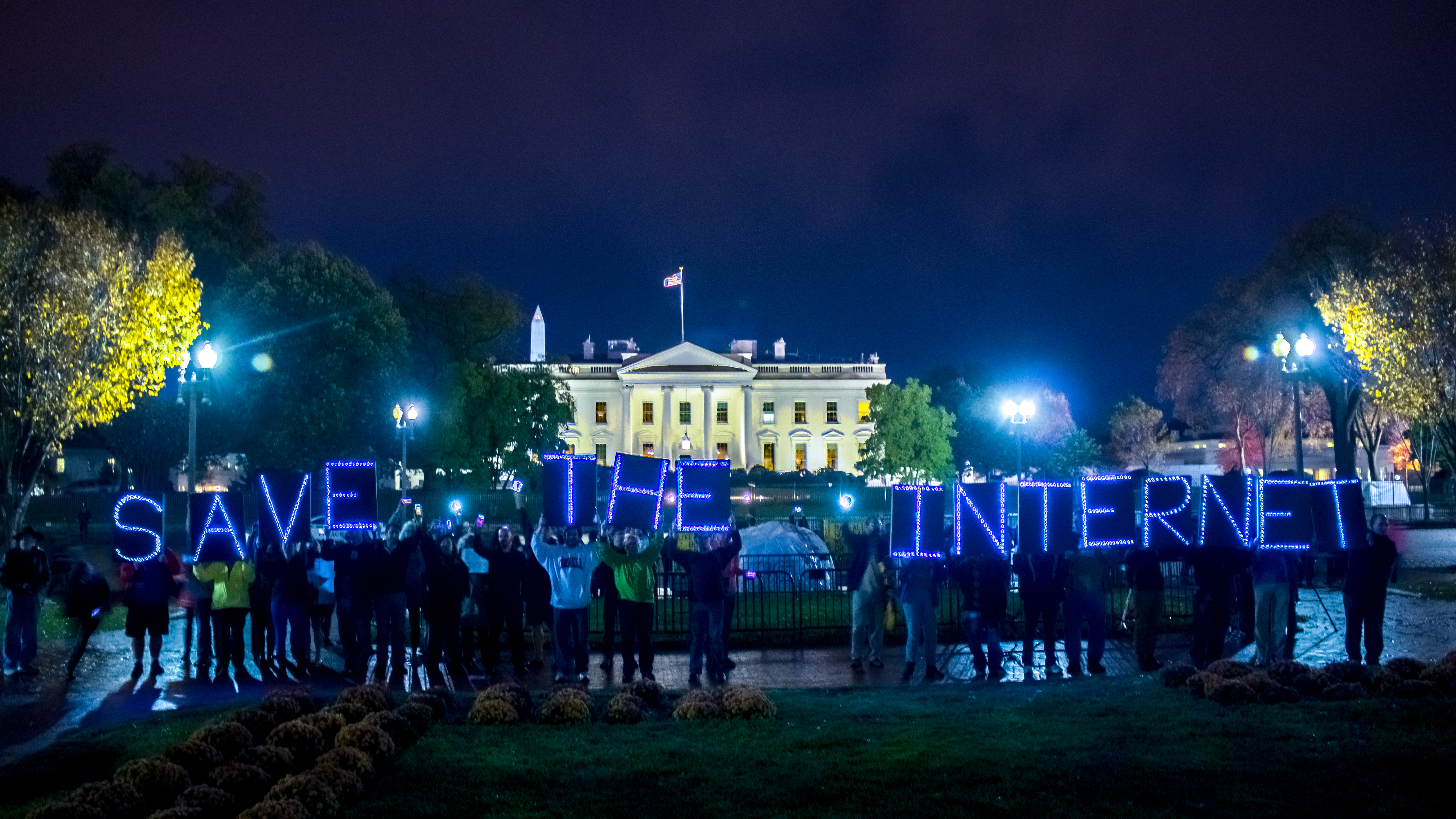
2014 net neutrality protest at the White House. Photo Joseph Gruber (CC BY-NC-ND 2.0)
U.S. regulators are moving forward with plans to undo current net neutrality protections despite strong public opposition. On December 14, the Federal Communications Committee (FCC) plans to vote to repeal the rules adopted in 2015, which provide strong net neutrality protections that prevent ISPs from blocking, throttling, or offering paid prioritization for certain types of content. Several major internet companies, including Google, Facebook, Netflix, and Reddit, have spoken out in support of keeping the existing net neutrality protections, and a coalition of NGOs and activists have organized over 700 protests in all 50 states this week to oppose the FCC’s plan. Verizon, however, has asked the FCC to preempt any state laws regulating net neutrality, in the event that individual states pass their own net neutrality rules, and Comcast deleted a net neutrality pledge from its website the same day the rules repeal was announced, according to Ars Technica. The FCC has been criticized for ignoring strong public support for net neutrality, and for proceeding with its plan despite evidence that many of the public comments submitted about the repeal were spam or used stolen identities.
Telecommunications companies should not prioritize or block certain types of network traffic, and should publicly disclose a commitment to not prioritize or block traffic. A free and open internet depends on the ability for all users to have equal access to content and services, which is not possible if ISPs block or delay certain types of content or apps. However, it is often unclear whether companies use these types of network management practices, which is why strong net neutrality protections can help ensure that users have equal access to internet content. As 2017 Corporate Accountability Index research shows, most of the world’s leading telecommunications companies fall short of making such a public commitment. Of the ten telecommunications companies evaluated in the 2017 Index, Vodafone was the only one to clearly disclose that it does not prioritize, block, or delay certain types of traffic, applications, protocols, or content for reasons beyond assuring quality of service and reliability of the network. (more…)